
April Graff, MS, RD, LD
Hy-Vee Dietitian
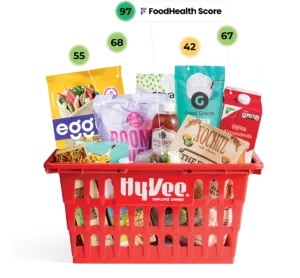
As a retail dietitian, I know grocery shopping can feel overwhelming, especially when you’re fueling for 26.2 miles. You’re juggling training runs, recovery, and meal planning. Labels, claims, and nutrition facts can be confusing. That’s why there’s a new tool that makes it easier: the FoodHealth Score.
This score helps you quickly see the nutritional value of a product and compare options without spending extra time reading every label. Each product gets a score from 1 to 100 based on its ingredients and nutrient profile. The higher the number, the more nutritious the product. This makes it perfect for building meals that support endurance, recovery, and overall health.
The score is based on a science-driven algorithm and considers:
- Nutrient Density: Does the food provide beneficial nutrients like fiber, vitamins, and minerals that runners need for energy and recovery?
- Ingredient Quality: What types of fats, sugars, and other components are included?

How to Use the FoodHealth Score for Marathon Fueling
Find the Score. When browsing products on the Hy-Vee mobile app or website, you’ll see the FoodHealth Score near the product details. Tap or click to view more information about what influences the score, such as nutrient density and ingredient quality.
Start with Your Favorites. Search for your go-to training staples like pasta, nut butter, or energy bars, and check their scores. This gives you a baseline and helps you identify where small improvements can be made.
Look for Easy Wins. If your bread scores 30, consider swapping it for a whole-grain option that scores closer to 80. Whole grains provide steady energy for long runs and help replenish glycogen stores.
Compare Before You Add. When viewing product details, check suggested alternatives with higher scores. For example, if you’re buying snacks for your long run, you might find an energy bar that scores 50 and swap it for one that scores 85 with more complex carbs and less added sugar.
Use Cart Suggestions. Before checkout online, review your cart for swap opportunities. For instance, a flavored yogurt scoring 40 could be replaced with a plain Greek yogurt scoring 90, giving you more protein for muscle recovery after those tough tempo runs.
Focus on Incremental Changes. You don’t need to overhaul your entire cart in one trip. Aim for a few higher-scoring swaps each time you shop to build healthier habits gradually. Think of it like training: small steps lead to big results.
Top 5 Easy Swaps for Runners
- Peanut Butter: Regular brand (Score: 45) → Natural peanut butter (Score: 75)
Why? More healthy fats for sustained energy without added sugars. - Bread: White sandwich bread (Score: 30) → 100% whole-grain bread (Score: 80)
Why? Whole grains help maintain energy during long runs. - Yogurt: Flavored yogurt with added sugar (Score: 40) → Plain Greek yogurt (Score: 90)
Why? Extra protein for muscle recovery after training. - Cereal: Sugary cereal (Score: 25) → High-fiber whole-grain cereal (Score: 85)
Why? Fiber supports digestion and steady energy release. - Cooking Oil: Vegetable shortening (Score: 20) → Olive oil (Score: 95)
Why? Heart-healthy fats for overall wellness and inflammation control.
The FoodHealth Score helps you make informed choices without the stress of decoding labels. Whether your goal is fueling long runs, optimizing recovery, or supporting overall wellness, this tool makes healthy shopping simple and achievable.
Learn more at: FoodHealth Score | Hy-Vee
Want help creating custom nutrition recommendations? Book a free Discovery Call with April Graff, Hy-Vee Dietitian.